• Our Story, Identity & Convictions
Who We Are — and Why We Were Called
This page tells the full story of the Concerned Members Group: our formation, our convictions, what we stand for, what we are not, and the spiritual foundation on which everything we do is built.
On This Page
- Who We Are
- How We Were Formed
- What We Believe
- Our Identity — Clearly Stated
- On Leadership & Accountability
Who We Are
Who We Are
A Fellowship of Baptized Members
The Concerned Members Group is comprised entirely of baptized, active Seventh-day Adventist members from various churches across the Cape Conference. We come from different congregations, professions, and backgrounds — elders, deacons, educators, professionals, and laypeople — united by shared conviction, not shared grievance.
We are not a faction that formed in anger. We are members who have watched — and experienced — a gradual erosion of confidence in governance structures within the Cape Conference. We have raised concerns through letters, meetings, emails, and formal requests over an extended period. Many of these concerns have been met with inadequate response or no response at all.
At some point, continued silence becomes complicity. At some point, the pastoral and prophetic responsibility of every church member demands more than private frustration. The Concerned Members Group was established at that point.
We are not naive about the difficulty of what we are doing. Raising questions about leadership and governance within a religious institution is sensitive. It can be misunderstood. It can be misrepresented. We accept that risk — because we believe the integrity of the Church is worth it.
"The Church belongs to Jesus Christ, and every member is called to be a faithful steward of its mission and integrity."
— CMG Foundation Conviction · 2026
We come from different churches, different backgrounds, and different professions. What unites us is not dissatisfaction — it is conviction. A conviction that the Seventh-day Adventist Church is worth standing in, worth calling to account, and worth serving faithfully, even when that faithfulness is uncomfortable.
We love this Church. We are not leaving it. We are standing in it — calling it to the standard it has always proclaimed.
"We are Seventh-day Adventists. We believe the Three Angels' Messages. We believe the Remnant Church has a prophetic calling. And we believe that a Church that proclaims righteousness must practice it — in governance, in stewardship, and in how it treats its members and workers."
We Were Formed From
Our History
How the CMG Was Formed
The Concerned Members Group did not emerge overnight. It is the result of a long and often difficult process — a process in which members tried every available channel before concluding that a structured, collective voice was necessary.
Over time, concerns about governance, financial stewardship, procedural fairness, and leadership practices were raised individually, informally, and then formally. Letters were written. Meetings were requested. Emails were sent. Some received cursory responses. Others received none.
The pattern that emerged was one of systemic avoidance — not hostility, but a consistent failure to meaningfully engage with legitimate concerns raised by members who had every right, under the Church Manual and Working Policy, to receive a response.
It became clear that individual voices — no matter how well-reasoned or how faithfully presented — were insufficient to bring about the engagement that was needed. A coordinated, respectful, and policy-grounded collective voice was required.
"Let all things be done decently and in order."
— 1 Corinthians 14:40 (NKJV)
The Concerned Members Group was therefore formally established in 2026, with the issuance of an Open Letter to the churches of the Cape Conference on 8 June 2026 — addressed to pastors, elders, church boards, and members — as the group's formal introduction and declaration of purpose.
Formation Timeline
Individual Members Raise Issues
Members, leaders, and congregations begin raising concerns about governance, stewardship, procedural matters, and leadership practices through informal and formal channels over an extended period.
Letters, Meetings, Formal Requests
Formal correspondence, meeting requests, and written submissions are made to Conference leadership. Many of these engagements receive inadequate or no substantive response.
Collective Voice Recognized as Necessary
Members from multiple congregations recognize that a structured, coordinated, and policy-aligned collective platform is needed to effectively pursue accountability and transparency.
CMG Formally Established & Letter Issued
The Concerned Members Group is formally established. An Open Letter is issued to the churches of the Cape Conference, formally introducing the group and its purpose.
CMG Formally Established & Letter Issued
The Concerned Members Group is formally established. An Open Letter is issued to the churches of the Cape Conference, formally introducing the group and its purpose.
Our Convictions
Who We Are
These are not positions we adopted for this moment. They are convictions rooted in Scripture, the SDA Church Manual, and a deep love for the Remnant Church.

For the Church
We love the Seventh-day Adventist Church with all its imperfections. We are fully committed to its doctrines, its prophetic identity, and its worldwide mission. The Three Angels' Messages are still our calling. We have not lost faith in the Church — we have too much faith in it to remain silent when its governance falls short.

For Biblical Leadership
Leadership in the Church of Christ is a sacred stewardship, not a position of personal authority. We believe leadership must reflect the servant model that Jesus demonstrated — characterised by humility, sacrifice, and a willingness to be accountable.
"Whoever desires to become great among you, let him be your servant."
— Mark 10:43 (NKJV)

For Accountability
Accountability is not rebellion. It is not disloyalty. It is a deeply biblical principle — one that protects both those in leadership and those they serve. To demand accountability is to honour the trust that members place in their leaders and the trust that God places in His Church.
"For we must all appear before the judgment seat of Christ."
— 2 Corinthians 5:10 (NKJV)

For Unity Through Truth
True unity is not achieved through silence, or through suppressing legitimate concerns. It is built on honesty, trust, transparency, and mutual respect. The unity Christ prays for in John 17 is a unity grounded in truth — not manufactured by avoidance of difficult conversations.
"Sanctify them by Your truth. Your word is truth."
— John 17:17 (NKJV)
For Due Process
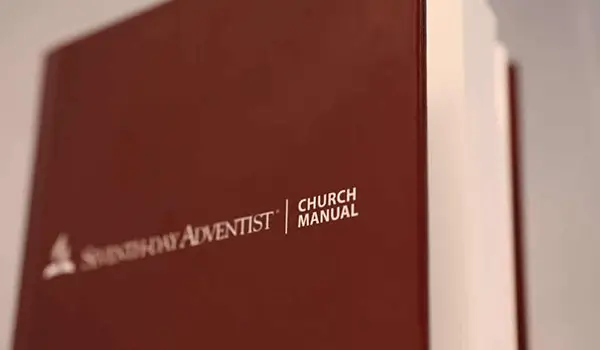
The Seventh-day Adventist Church has a Church Manual and an established Working Policy for good reason. These documents exist to protect members, workers, and leaders alike. We support their fair, consistent, and equitable application — for everyone, without exception.

For Stewardship
Every rand of tithe and offering given to the Cape Conference is a sacred trust. It belongs to God and is given by members who believe it will be used faithfully for the advance of the gospel. The management of these funds must be transparent, accountable, and fully aligned with denominational policy.
"Moreover it is required in stewards that one be found faithful."
— 1 Corinthians 4:2 (NKJV
For the Avoidance of All Doubt
Our Identity — Stated Plainly
We anticipate misrepresentation. We have chosen to address it directly — not defensively, but honestly.
We Are
- Committed, baptized, active SDA Church members
- Advocates for biblical accountability in leadership
- Supporters of the servant-leadership model of Jesus Christ
- Voices for procedural fairness and due process for all
- Members calling for integrity in managing sacred tithe funds
- Seekers of genuine reconciliation and restoration
- Committed to the Three Angels' Messages and prophetic mission
- Grounded in the Bible, Church Manual, and Working Policy
- Respectful of Conference leadership as persons, while questioning specific practices and decisions
We Are Not
- A breakaway movement, splinter group, or independent ministry
- A competing or parallel church structure of any kind
- A political faction, party, or opposition movement
- Seeking division, conflict, or instability in the body of Christ
- Opposed to Conference leadership as individual persons
- Against the Seventh-day Adventist Church or its prophetic mission
- A replacement for any recognized denominational body or committee
- Operating outside or against the framework of the SDA Church
- Motivated by personal ambition, grievance, or political agenda
"Our desire is reform where necessary, reconciliation where possible, and renewal where needed — always within the framework of the Seventh-day Adventist Church, always under the headship of Jesus Christ."
A Final Word
Christ Is the Head of the Church
"Our confidence does not rest in any individual, committee, administration, or movement. Our confidence rests in Jesus Christ."
We approach every issue prayerfully, carefully, respectfully, and faithfully — remembering that we are all stewards of a sacred trust, and that one day we will give an account before God for how we cared for His Church.